Insurance and Safety for Commercial Waste Greenwich
 Commercial Waste Greenwich is committed to delivering secure, compliant and safe waste services as an insured rubbish company. Our approach to insurance and safety is designed to protect clients, members of the public and our teams during every step of the waste collection and disposal process. We operate with full transparency about our cover and safety systems, explaining how public liability insurance works, how staff are trained and how we assess and manage risk on site. Whether you require an insured waste removal company for a single collection or ongoing commercial waste removal, our standards prioritise predictable, documented protection.
Public Liability Insurance: what it covers and why it matters
Public liability is the backbone of any reputable insured rubbish removal contractor. This policy protects third parties if property damage or personal injury arises from our operations. Our insured commercial waste company maintains robust public liability limits that are explicitly tailored to the scale of work in Greenwich and surrounding commercial districts. We carry evidence of insurance and can detail the limits and scope: from site-to-site movements and vehicle operation to accidental damage while clearing commercial premises. Proof of insurance is kept current and available to demonstrate that we are an accountable, insured waste removal company.
 As an insured rubbish collection provider we also consider ancillary covers. These include employers’ liability for staff, pollution liability for accidental releases, and motor insurance that matches the fleet’s operational use. Clients requesting an insured commercial waste company should ask for specific certificate details: insurer name, policy number, indemnity limits and effective dates. Transparency reduces uncertainty and shows we are prepared to meet the legal and contractual demands placed on commercial waste contractors.
Staff training is central to our safety culture. Every employee of this insured waste removal company receives structured induction training followed by role-specific instruction. Training covers waste segregation rules, safe manual handling, confined space awareness, and traffic management near commercial premises. Practical competency is assessed and recorded: staff must demonstrate safe operating behaviour before undertaking unsupervised work. Training records are audited regularly, and refresher modules are scheduled to keep awareness high in line with legislative changes and industry best practice.
Personal Protective Equipment (PPE): standards and enforcement
 PPE is not optional in an insured rubbish company — it is a non-negotiable control. Our policy defines minimum PPE for each task, including high-visibility clothing, steel-toe boots, gloves appropriate to the waste type, eye protection, and respiratory protection where dust or fumes are possible. Supervisors enforce PPE compliance and undertake spot checks to ensure correct use. We also emphasise selection of the right specification: for example, cut-resistant gloves for glass handling and chemical-resistant gloves for hazardous liquids. Correct PPE selection reduces exposure and supports our public liability mitigation.
Routine inspections of kit and replacement schedules are documented so that all PPE meets recognised standards. We make use of clear signage on-site and provide practical demonstrations during toolbox talks. These actions ensure the insured commercial waste removal teams remain protected while performing demanding tasks in commercial yard areas, loading bays and public interfaces.
Risk assessment is integral to how an insured rubbish collection business operates. Before any job, we undertake a formal risk assessment that identifies hazards, records existing controls, and sets out additional actions required to make the task safe. Assessments are proportionate and pragmatic: they consider site access, traffic routes, expected waste types, manual handling demands, weather impacts and potential contaminants. Each assessment is recorded, signed by the operative and retained on file as evidence of due diligence.
 Our risk assessment process follows a clear structure: identify hazards, evaluate likelihood and severity, implement controls, and monitor for effectiveness. Controls may include segregation of waste streams to prevent cross-contamination, temporary traffic management for deliveries, using mechanical aids to reduce manual handling, and isolating live machinery. For higher-risk jobs we prepare a site-specific method statement that works in tandem with the risk assessment, providing step-by-step safe systems of work which the insured waste removal company follows without exception.
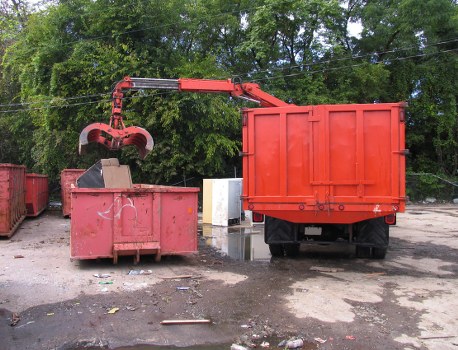 Finally, safety at Commercial Waste Greenwich is supported by ongoing monitoring and continuous improvement. We undertake regular safety audits, incident reviews and near-miss reporting to refine procedures. Emergency procedures and spill-response plans are in place and practised so that staff know how to act quickly. As an insured commercial waste company, we combine adequate insurance cover with proactive training, enforced PPE use and comprehensive risk assessment processes to deliver services that protect people and property during every stage of waste management.
